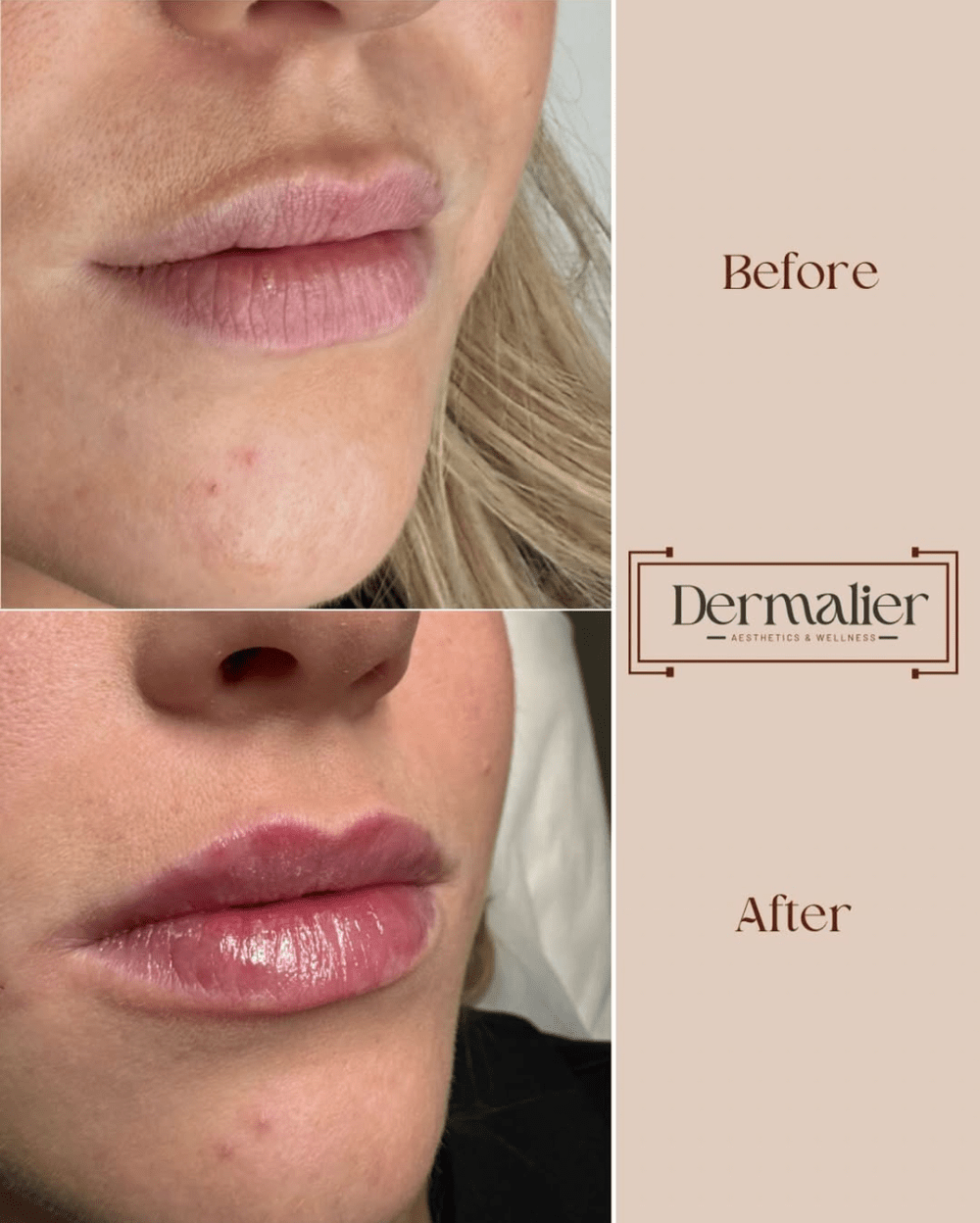
Where the Swedish Lip approach comes from
The Swedish Lip technique was developed by Swedish physician Dr. Rebecka Gardell. Vanessa Peixoto, APRN, trained directly with Dr. Gardell in Stockholm, Sweden, and brings that shape-first framework to her lip filler consultations in Lake Nona and Orlando.
Training in a named technique does not replace clinical judgment. It gives an injector another way to analyze morphology, choose an instrument and placement plan, and decide which parts of a lip should—and should not—be emphasized.
Shape-led rather than volume-led
A volume-led conversation begins with how much filler to add. A shape-led conversation begins with what the lip is doing from the front, profile, and in motion. Concavities, projection, upper-to-lower lip relationship, tissue quality, dental support, and previous filler can all change the plan.
Selective placement can improve support and contour without tracing every border or attempting to reproduce a standard social-media shape. The desired endpoint is a lip that belongs to the face around it.
How it differs from a copied lip shape
Terms such as Russian lips or keyhole lips often describe an aesthetic patients have seen in a photograph. A photograph can be useful for discussing preferences, but the same injection pattern does not create the same outcome on different anatomy.
The Swedish Lip approach is better understood as an assessment and placement philosophy. Vanessa may use elements of it when they suit the patient, or recommend another strategy when the anatomy, existing filler, or treatment goal calls for something different.
Who may be a good candidate
A shape-first plan may appeal to first-time lip filler patients, people seeking subtle definition or controlled projection, and patients who want improvement without making fullness the only objective. It may also help frame a thoughtful conversation about asymmetry or age-related change.
Patients with migrated or poorly positioned previous filler need an assessment before more product is added. Waiting, dissolving appropriate hyaluronic acid filler, or staging treatment may create a safer and more refined path.
What to expect after treatment
Swelling, tenderness, firmness, bruising, and temporary unevenness are common after lip injections. The first 24 to 48 hours can look more dramatic than the settled outcome, and the lips generally need about two weeks before a meaningful assessment.
Individualized aftercare matters. Severe or increasing pain, unusual color change, vision symptoms, or another concerning reaction requires prompt medical guidance rather than waiting for a routine follow-up.
This article is educational and does not replace an in-person medical evaluation. Treatment suitability, risks, benefits, recovery, and results vary by patient.